

Announcements
-
Similar Content
-
-
Latest Posts
-
 No. Turbo shuffle and surge/flutter are not the same thing. Specifically, on a GTR, turbo shuffle has a definite meaning. On a GTR, the twin turbos are assumed to be the same thing and to operate the same way, exactly. In reality, they do not. Their exhaust sides are fed and exhaust a little differently, to each other. Their inlet sides are fed and exhausted a little differently, to each other. Consequently, when they are "working" they are often at slightly different points on the compressor map compared to each other. What this means, particularly when coming on boost, is that one of them will spool up and start producing extra flow compared to the other, which will put back pressure on that other compressor, which will push the operating point on that other compressor up (vertically). This will generally result in it bumping up against the surge line on the map, but even if it doesn't, it upsets the compressor and you get this surging shuffle back and forth between them That is "turbo shuffle" on a GTR. It is related to other flutter effects heard on other turbo systems, but it is a particular feature of the somewhat crappy outlet piping arrangement on RB26s. There are plenty of mods that have been attempted with varying levels of success. People have ground out and/or welded more material into the twin turbo pipe to try to prevent it. Extending the divider inside it works, removing material doesn't. There are aftermarket replacement twin turbo pipes available, and these exist pretty mush purely because of this shuffle problem.
 -
 You can temporarily* use lock collars to keep it in place until you can do the bushes, back the nuts off, slide them in, snug back up. *temporarily is often for ever
 -

By nouveau_poor · Posted
Thanks for the quick reply. To be clear, when you say turbo shuffle do you mean turbo flutter "stustustu" or referring to something else? I had thought they were the same thing. When I wrote the post my intention was to say it wasn't a flutter/compression surge sound. My understanding was that a flutter sound would be occurring when throttle is released, whereas I can keep the throttle in the same position for this noise -
-
By nouveau_poor · Posted
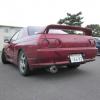
Hi everyone, I've been wrestling with this for a while now and have been trying to find out the cause. For context, the turbos used are Garrett 2860 -5s, the BOV is a BNR32 HKS SSQV IV kit, the car is currently tuned to ~470 whp on 17.5 psi. The car drives normally, pulls well when it doesn't happen, and I can replicate it fairly easily. It does not sound like turbo shuffle or flutter. The engine has only a thousand or so miles and has had this behavior since it was completed. After my engine was built for my R32 GTR, I noticed that the car now sometimes makes an air discharge sound on what appears to be positive boost pressure that sounds really similar to a BOV. I had thought that it was a BOV issue but even when replacing it with a brand new unit, the sound persisted. It seems like it's coming from the passenger side but I may be mistaken. The closest scenario I could find was this post here https://www.gtr.co.uk/threads/maybe-a-boost-leak-opinions.147955/https://www.gtr.co.uk/threads/maybe-a-boost-leak-opinions.147955/ started by @yakshii and it sounds very similar. As in, at partial throttle once I reach positive boost I begin to hear the same psh psh psh psh psh sound like air is leaking somewhere when I keep the throttle in the same position. It most commonly happens in 4th gear at around 3-3.5k RPM and 5th gear around 2.5-3k RPM, which seems to coincide with normal positive boost thresholds. It might be similar to what @Austrian GTR mentioned about his own HKS SSQV. Notable difference would be that when he applies more throttle when it happens, it stops. In my scenario if I apply more throttle during this repeated psh psh psh sound, the cadence of the sound gets faster and louder rather than stopping. If I lift off slightly and apply throttle again, it will normally stop and pull without issue. I've checked all rubber couplers to ensure that they are tight, but have not gotten the opportunity to properly do a pressurized boost leak test. If anyone has had similar experiences or thoughts on what might be the cause, I'd be very keen to hear them. I also have a video of it happening from inside the cabin, if that would make it easier to understand: https://youtu.be/2zqZXcx8jbA
-




Recommended Posts
Create an account or sign in to comment
You need to be a member in order to leave a comment
Create an account
Sign up for a new account in our community. It's easy!
Register a new accountSign in
Already have an account? Sign in here.
Sign In Now